More immigration attorneys are exploring AI tools to work faster and more efficiently. But safe, ethical use requires clear boundaries. Here is the framework we use — built on years of petition drafting experience.
The conversation about AI for immigration lawyers is no longer hypothetical. Your clients are asking about it. Your competitors are experimenting with it. Bar associations are issuing guidance on it. And meanwhile, you still have a stack of H-1B petitions to get out the door.
We have spent years supporting immigration attorneys with petition drafting and case research. We have watched firms rush into AI tools without guardrails — and watched others avoid them entirely, at a real cost to their capacity. Neither approach serves your clients or your practice.
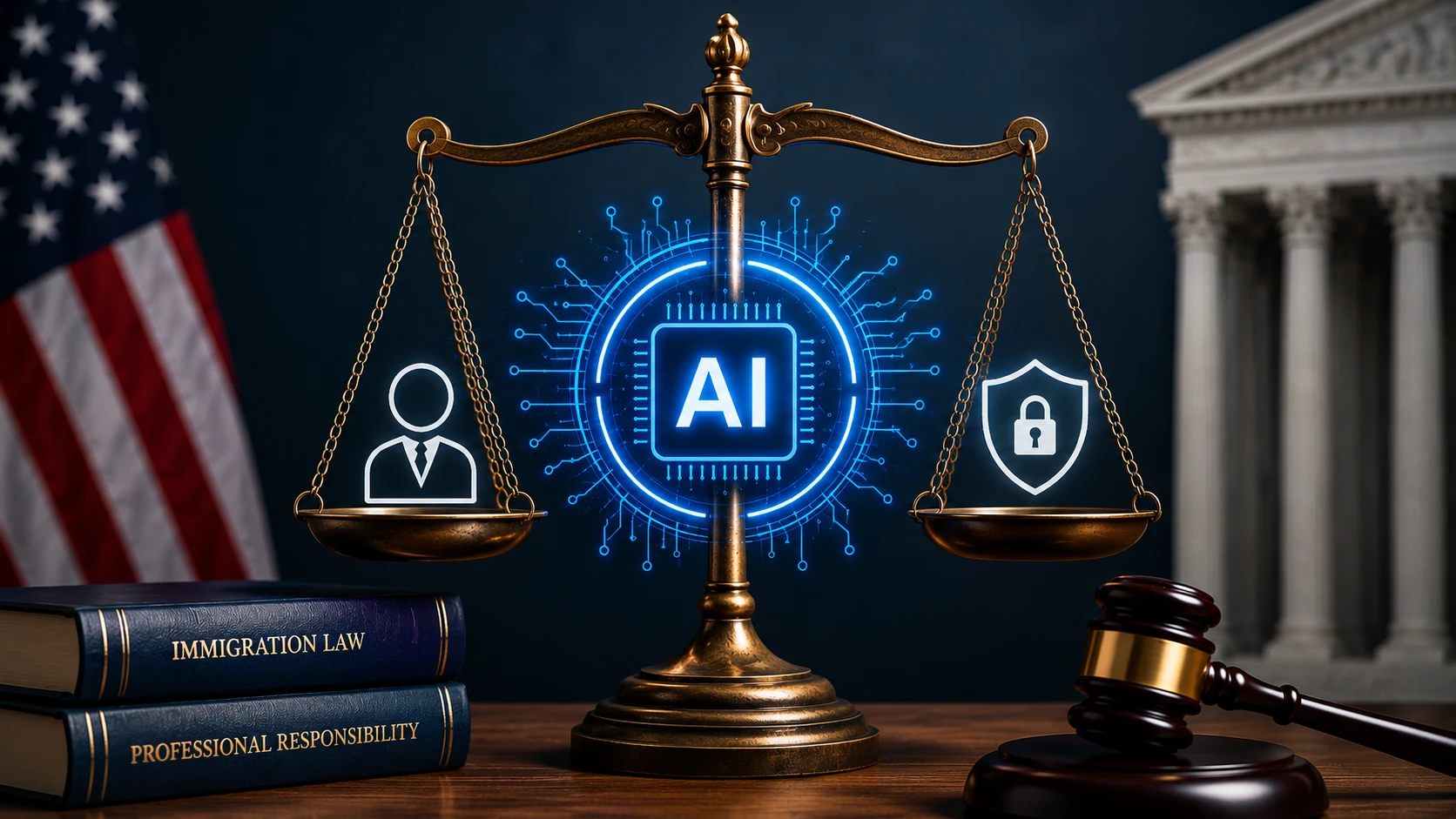
This article offers a practical, defensible framework for AI in immigration law: where it belongs in your workflow, where it does not, and how to use it in a way that protects client confidentiality, upholds AI legal ethics, and holds up to bar scrutiny.
The Non-Negotiable Rule: AI Touches Public Record Only
Before adopting any AI tool, draw a hard line around client data. Names, A-Numbers, dates of birth, passport details, employment history, family information, financial records — none of it enters an AI system. Not a large language model, not an AI-assisted drafting platform, not a tool you are evaluating on a Friday afternoon.
This is not overcaution. It is the minimum required to preserve attorney-client privilege and comply with your data protection obligations. The moment client-specific information leaves your secure case management system and enters a third-party AI platform, you have lost control of it. AI and immigration data simply do not mix. That boundary is the foundation of every responsible AI workflow for law firms.
What AI Can and Cannot Touch in Your Petition Workflow
| Content Type | Status |
|---|---|
| Federal statutes, USCIS regulations, policy manuals, and agency memos | Safe Public record — safe to analyze with AI |
| AAO decisions, BIA precedent, federal circuit court opinions | Safe Public record — safe to analyze with AI |
| State Department Foreign Affairs Manual and country-conditions reports | Safe Public record — safe to analyze with AI |
| Grammar and clarity review of attorney-drafted language (stripped of PII) | Caution Permissible with care — review before use |
| Client names, A-Numbers, dates of birth, or any biographical detail | Never Client-confidential information |
| Client documents: passports, I-94s, pay stubs, tax records, degree certificates | Never Client-confidential information |
| Employer data, org charts, financial statements, or trade secrets | Never Client-confidential and potentially privileged |
| AI-generated legal arguments or client narrative copied directly into a filing | Never Attorney authorship and verification required |
Best AI Use Cases for Immigration Lawyers
Once client data is protected, legitimate AI use cases deliver real time savings. Here is where we see AI legal drafting assistance perform well in immigration practice — without ethical exposure.
Regulatory synthesis
USCIS policy manuals run to hundreds of pages. AI tools are effective at condensing this material, surfacing relevant passages for a given visa category, and organizing it into a research outline the attorney can verify and build from. That is a legitimate mechanical task, and AI handles it efficiently.
Precedent mapping
When building an RFE response or brief, relevant AAO decisions and circuit precedents need to be found and organized. AI can assist in mapping which published decisions support a given legal theory — provided every citation is verified by a human attorney before it goes into a filing. Citation hallucinations are real. Verify everything.
Structural scaffolding
AI can help generate the architecture of a petition letter — section headers, evidentiary framework, the logical order of argument — based on the applicable standard. The attorney builds the actual substance. Think of it as a fast first-draft outline, not a finished document.
A Safe AI Workflow for Immigration Law Firms
The following five-step workflow is what we use with the attorney teams we support. It produces faster, better-resourced petitions while keeping the attorney in the driver's seat at every stage.
Synthesize public-record sources: policy manuals, regulations, relevant decisions. No client data enters this phase.
Attorney reviews the research outline, confirms legal theory, identifies the strongest evidentiary pathway.
All client-specific content — narrative, argument, evidence descriptions — is drafted by the attorney or paralegal from the secure system.
Every legal citation is confirmed against the original authoritative source by a human attorney. No exceptions.
The attorney reviews the complete filing, takes full professional responsibility, and signs. AI is not the author of record.
AI Legal Ethics: The Citation Hallucination Problem Is Not Theoretical
AI legal ethics guidance from bar associations consistently flags one risk above all others: citation hallucinations. Large language models generate plausible-sounding but entirely fictional case citations. The case name looks right. The reporter looks right. The pin site looks right. The case does not exist.
In immigration practice, this is acutely dangerous. USCIS officers and immigration judges verify citations. An adjudicator who cannot locate a cited AAO decision does not assume innocent error. The professional consequences range from a formal response letter to sanctions under applicable court rules.
The fix is non-negotiable: every citation in every filing is checked against the original source by a human attorney before submission. This rule belongs in your firm's written AI policy, and it applies whether the citation came from AI assistance, a paralegal's research memo, or anywhere else.
Building Your AI Policy for Law Firms: What Clients Need to See
Clients increasingly ask whether their information is being fed into AI systems. Immigration clients — many with significant privacy concerns around their biographic data and immigration history — deserve a clear, written answer.
A credible AI policy for law firms addresses four questions at minimum: what AI is used for, what it is never used for, how client data is protected, and who bears professional responsibility for the work product. This policy should be provided at intake, not buried in engagement letters.
Transparency here is not a liability. Clients who understand that their attorney has thought carefully about AI use are more confident, not less, in the quality of their representation.
The firms that will use AI in immigration law most effectively are not the first adopters or the holdouts. They are the ones that define clear rules, hold those rules consistently, and redirect the time AI saves them toward the high-judgment work that produces better outcomes for clients. That is the competitive advantage worth building.
Frequently Asked Questions
Can immigration lawyers use AI?
Yes — with proper safeguards. Immigration lawyers can use AI to research public-record sources such as USCIS policy manuals, federal regulations, and published case decisions. AI should never be used to draft client-specific content or process any personally identifiable client information. All filings must be reviewed, verified, and signed by a licensed attorney.
Is ChatGPT safe for immigration law practice?
General-purpose tools like ChatGPT are not appropriate for client-specific immigration work. They lack the data isolation controls required to protect confidential information, and their outputs have not been validated for legal accuracy. Attorneys who use general AI tools risk inadvertently disclosing client data and submitting unverified content. Purpose-built, attorney-supervised workflows are the safer and more defensible approach.
Does using AI violate attorney-client privilege?
Not if it is used correctly. Attorney-client privilege is preserved as long as confidential client information is never entered into an AI platform. If your AI workflow touches only public-record sources and the attorney retains full authorship and oversight of all client-specific content, privilege is intact. The risk arises when client data enters a third-party system — which is why a clear, written AI policy is essential.
What AI tasks are safe for immigration law firms?
Safe AI use cases in immigration practice include: synthesizing USCIS policy manuals and federal regulations, researching published AAO decisions and circuit court precedents, building structural outlines for petition letters based on public standards, and reviewing attorney-drafted language for grammar and clarity — with all client-identifying information removed before any AI tool is engaged.
What should an AI policy for a law firm include?
A sound AI policy for immigration law firms should define: which AI tools are approved, what categories of information may and may not be entered into those tools, how attorney oversight is maintained at each stage of the workflow, how citations and AI-assisted outputs are verified before filing, and how the firm communicates its AI practices to clients. The policy should be reviewed regularly against evolving bar guidance.
For informational purposes only. This article does not constitute legal advice.
Work with Experienced Immigration Paralegals
We support U.S. immigration attorneys with compliant, attorney-supervised petition drafting and AI-informed research workflows. Let's talk about your practice.
Learn About Our Services